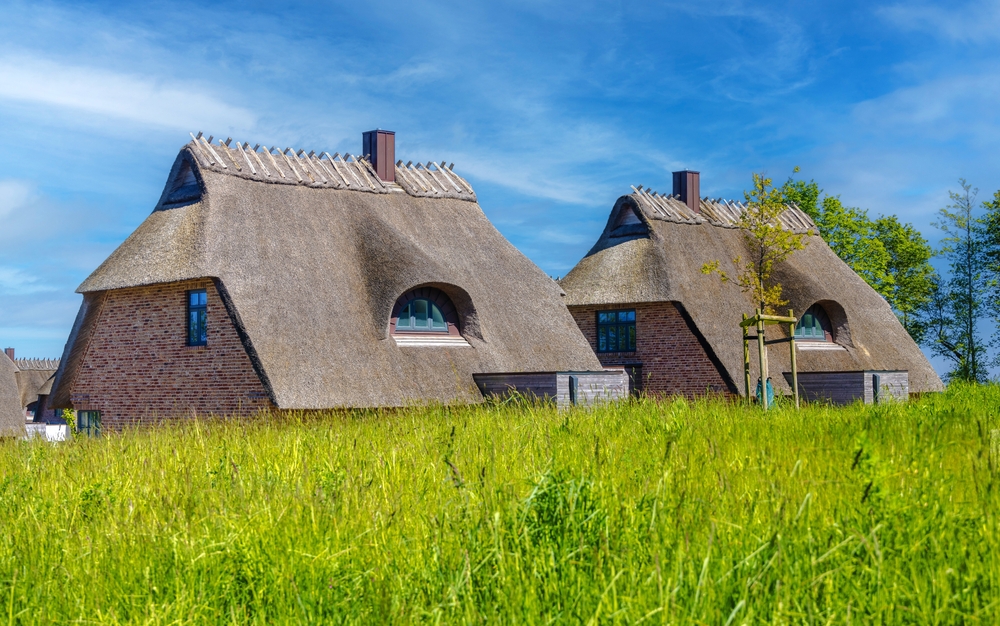
Thatched houses capture something quintessentially British. That honey-coloured roof nestled in a village setting, roses around the door, centuries of history in every reed. But beyond this appeal, what do you need to know before buying a thatched cottage?
If you’re considering a thatch roof house, understanding the practicalities makes all the difference. From insurance costs to maintenance schedules, here’s what first-time buyers need to know about owning a thatched house.
Related: Building and contents insurance: A guide for landlords
What is a thatched house?
A thatched house features a roof made from dried vegetation, traditionally water reed, long straw, or combed wheat reed. This ancient roofing method dates back thousands of years and remains particularly common in rural England, where skilled thatchers continue to practice their craft.
The thatched cottage typically includes timber-framed construction, thick walls, and low ceilings. Many date from the 16th to 18th centuries, though you’ll also find modern thatch houses built in traditional styles. The old thatch you see on period properties often conceals multiple layers applied over centuries, creating impressive depth and character.
Types of thatched roofs in the UK
Water reed represents the most durable thatching material, lasting 50-60 years when properly maintained. Imported primarily from Eastern Europe, water reed creates a sleek, angular finish. It’s the premium choice for the thatched house market.
Long straw thatching, the traditional English method, lasts 20-30 years and creates a softer, more organic appearance. The roof seems to melt into the building, with rounded edges and a textured surface.
Combed wheat reed sits between the two, lasting 30-40 years. It’s grown and harvested specifically for thatching, creating a neat finish that’s particularly popular in the South of England.
The reality of insurance
Here’s where thatched cottage ownership gets practical. Specialist insurance is essential and costs significantly more than standard home insurance. Expect premiums to be several times higher than typical home cover.
Fire risk is the main concern. While modern fire retardants have improved safety, insurers remain cautious. Many require minimum distance from neighbours, restrictions on wood-burning stoves, and specific fire detection systems.
Not all insurers cover thatched properties. Those that do often impose strict conditions on maintenance standards and may require annual inspections. Factor this into your budget from the start.
Related: Property searches when buying a house: What you need to know
Maintenance and costs
Old thatch requires regular maintenance. Ridge repairs are typically needed every 10-15 years, while full re-thatching becomes necessary depending on the material – — water reed lasts longest, followed by combed wheat reed, then long straw.
Annual inspections by a qualified thatcher are essential, checking for damage, pest problems, and general wear. Wire netting protects against bird damage. You’ll also need to clear moss and maintain good drainage to prevent moisture issues.
The thatched house requires proactive ownership. Neglect leads to exponential costs as water damage spreads through the roof and into the property.
Living with thatch
The practical side extends beyond maintenance. Loft conversions are virtually impossible with a thatched roof. Limited roof space means restricted storage. Satellite dishes and solar panels present challenges, often requiring planning permission or specialist installation.
However, thatch offers excellent insulation. The thick roof keeps homes cool in summer and warm in winter, potentially offsetting higher heating costs in older properties. The natural materials breathe, helping regulate humidity inside.
Modern thatch houses built to contemporary standards offer the aesthetic appeal without some period property challenges. They include proper damp-proofing, modern electrics, and efficient heating while maintaining traditional appearance.
Selling a thatched cottage
When it comes to resale, thatched cottages appeal to a specific buyer pool. Those seeking character, history, and rural charm will pay premiums for well-maintained examples in desirable villages. Properties with recent re-thatching hold appeal as buyers avoid immediate major costs.
Location matters enormously. A thatched cottage in a sought-after village performs very differently to one in a remote location with poor amenities. Access to skilled thatchers locally adds value.
Be transparent about maintenance history. Recent roof work, up-to-date insurance, and proper documentation reassure buyers and smooth the sales process.
Related: How much value can outbuildings add to properties?
Is a thatched house right for you?
Think carefully about your circumstances. Specialist insurance and regular maintenance require a significant budget. The practical limitations suit some lifestyles better than others. You need to value character and history enough to embrace the additional responsibilities.
First-time buyers should particularly consider ongoing costs. Unlike standard properties where roof replacement might be once-in-a-lifetime, thatch requires continuous investment throughout ownership.
For the right buyer, a thatched cottage offers unmatched character and a genuine connection to English architectural heritage. But it’s a lifestyle choice as much as a property purchase.
Considering a thatched property? Contact your local Parkers branch for advice on your local market and what to look for when viewing thatched cottages.